
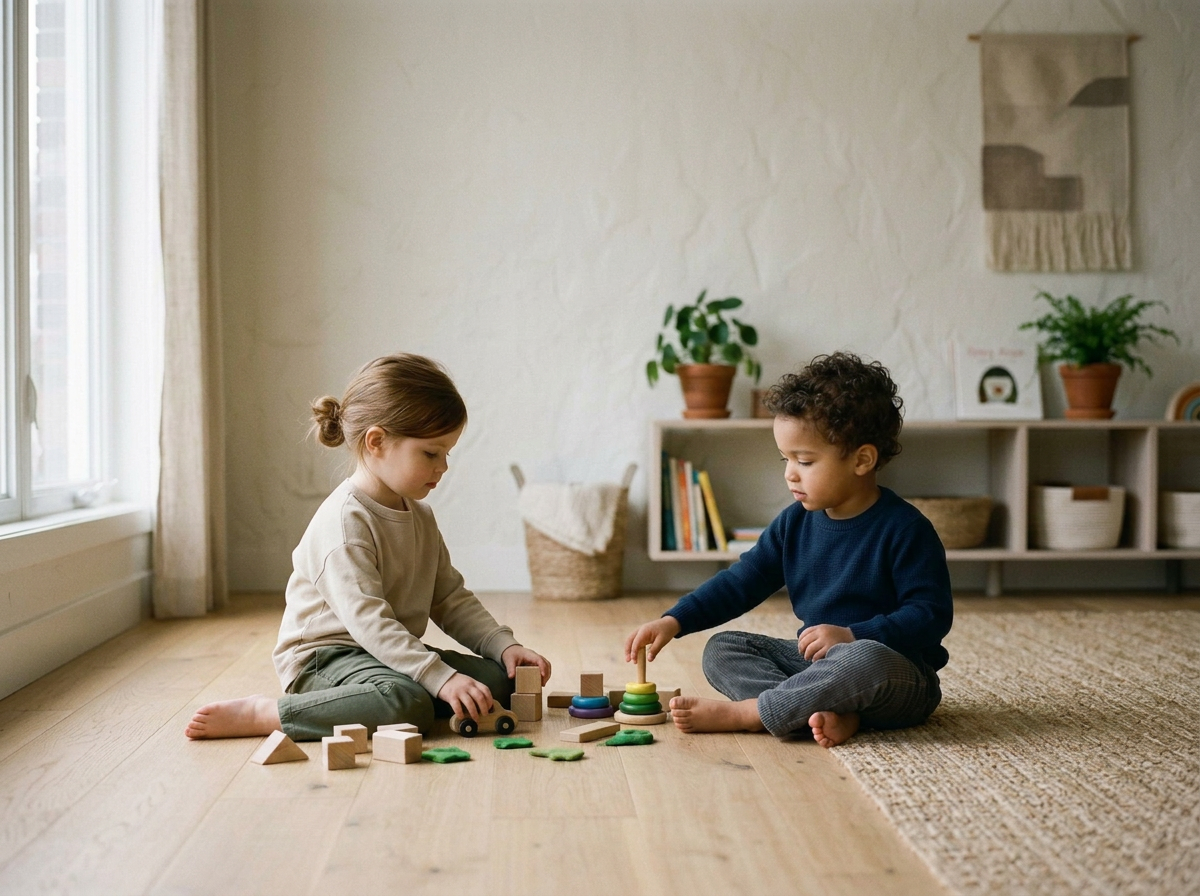
If you’ve ever spent time around toddlers or preschoolers, chances are you’ve seen W-sitting. Maybe you’ve even heard someone say, “Don’t sit like that! You’ll hurt your hips!” Or perhaps, as a parent, you’ve been told to correct your child’s sitting position every time they play on the floor.
W-sitting is one of those topics that comes up frequently in pediatric occupational therapy, and it can sometimes feel like there are a lot of scary messages surrounding it.
But what if we took a step back?
W-sitting isn’t necessarily bad, and it certainly isn’t something that needs to cause panic every time you see your child doing it. Like many things in child development, the bigger picture matters more than one particular position.
Let’s break down what W-sitting is, why it gets so much attention, and what parents and caregivers actually need to know.
What Is W-Sitting?
W-sitting is a floor-sitting position where a child sits on their bottom with their knees bent in front of them and their feet positioned out to either side of their hips. When viewed from above, their legs resemble the shape of the letter W.
This position is particularly common in toddlers and preschool-aged children. You might notice your child W-sitting while playing with toys, building blocks, completing puzzles, or engaging in imaginative play.
So, why do children choose this position?
Quite simply, it can feel comfortable!
W-sitting creates a wide base of support, allowing children to feel stable without needing to work as hard to maintain their balance. This can be especially appealing for young children who are still developing their postural control, coordination, and balance.
For a child who wants to focus on playing rather than keeping their body upright, W-sitting can feel like an easy and natural choice.
Why Does W-Sitting Get Such a Bad Reputation?
There are several reasons why therapists and other professionals have traditionally encouraged children to explore alternative sitting positions.
1. It provides a wide base of support
When children sit in a W-position, their legs create a broad base that helps stabilize their bodies. This can reduce the amount of active trunk control and balance they need to maintain the position.
In other sitting positions, such as cross-legged sitting or side-sitting, children may need to make more adjustments through their trunk and hips to stay upright and move around.
From an occupational therapy perspective, we want children to have opportunities to develop strength, balance, and postural control in a variety of positions.
However, this doesn't mean W-sitting prevents those skills from developing. It simply means that relying exclusively on one position may limit opportunities to practice other movement patterns.
2. It can limit certain types of movement
One of the main concerns with W-sitting is that it can make it harder for children to rotate their trunks and shift their weight from side to side.
These movements are important during play. They help children reach for toys, cross the middle of their bodies, use both hands together, and develop coordination.
For example, imagine a child playing with blocks scattered around them. Sitting cross-legged or side-sitting may encourage them to lean, rotate, and reach in different directions. W-sitting can sometimes make it easier to remain facing forward without moving the trunk as much.
But here's the important distinction: W-sitting does not automatically mean a child is missing these skills. Many children who W-sit are perfectly capable of rotating their trunks, crossing midline, and moving efficiently in other positions.
What matters is whether a child has access to a variety of movement experiences, not whether they occasionally choose one particular sitting position.
3. It may be associated with underlying differences in strength, stability, or joint mobility
Some children prefer W-sitting because it feels more stable or comfortable than other positions. This preference may sometimes be associated with differences in postural control, muscle strength, joint mobility, or the way a child organizes their movements.
In some cases, W-sitting may be one of several clues that a child would benefit from a closer look at their motor development.
However, the relationship can go both ways. Some children choose W-sitting simply because they like it, while others may gravitate toward it because other sitting positions require more effort.
W-sitting alone does not tell us whether a child has low muscle tone, weakness, a developmental delay, or another underlying concern. We need to consider the child's overall movement patterns and functional abilities.
4. Concerns about hip development
You may have heard that W-sitting is bad for a child's hips or can cause hip problems.
This is where the conversation often becomes more alarming than it needs to be.
W-sitting places the hips in a position of flexion and inward rotation. Because of this, concerns have been raised about its effects on hip alignment and development.
However, there is not strong evidence that W-sitting by itself causes hip deformities or permanently damages normally developing hips. Children's hip structure, joint mobility, and preferred positions vary, and the relationship between sitting posture and hip development is more complex than many social media posts suggest.
Some children have underlying hip or orthopedic conditions that require individualized positioning guidance. For these children, advice from their pediatrician, pediatric physical therapist, or occupational therapist may be particularly important.
For most typically developing children, though, occasional W-sitting is not a reason to assume that their hips are being damaged.
So, Is W-Sitting Really That Bad?
The short answer? Not necessarily!
W-sitting is a position, not a diagnosis. Seeing a child sit this way does not automatically mean something is wrong, and it does not mean that the child will develop future orthopedic or motor difficulties.
Many children move freely between sitting positions, explore their environment, and develop the skills they need while occasionally choosing to W-sit.
The concern is generally less about the position itself and more about the child's overall movement patterns.
For example, it may be worth looking more closely if a child:
Consistently uses W-sitting and rarely moves into other positions.
Has difficulty sitting upright or maintaining balance in other positions.
Frequently avoids trunk rotation, reaching, or moving across midline.
Has noticeable differences in strength, coordination, or movement between the two sides of their body.
Shows pain, discomfort, unusual stiffness, or significant limitations in hip movement.
Has difficulty participating in play or everyday activities because of motor challenges.
These observations do not automatically mean W-sitting is causing a problem. Rather, they may suggest that the child would benefit from an individualized assessment to better understand their movement and developmental needs.
A child who comfortably explores different positions and participates in play without difficulty is very different from a child who relies on one position because other positions are challenging.
That distinction matters!
What Should Parents Do When They See W-Sitting?
First, take a breath. You do not need to correct your child every single time they sit in a W-position.
Instead of treating W-sitting as something that must be eliminated, think about how you can encourage a variety of comfortable positions throughout the day.
Encourage different sitting positions through play
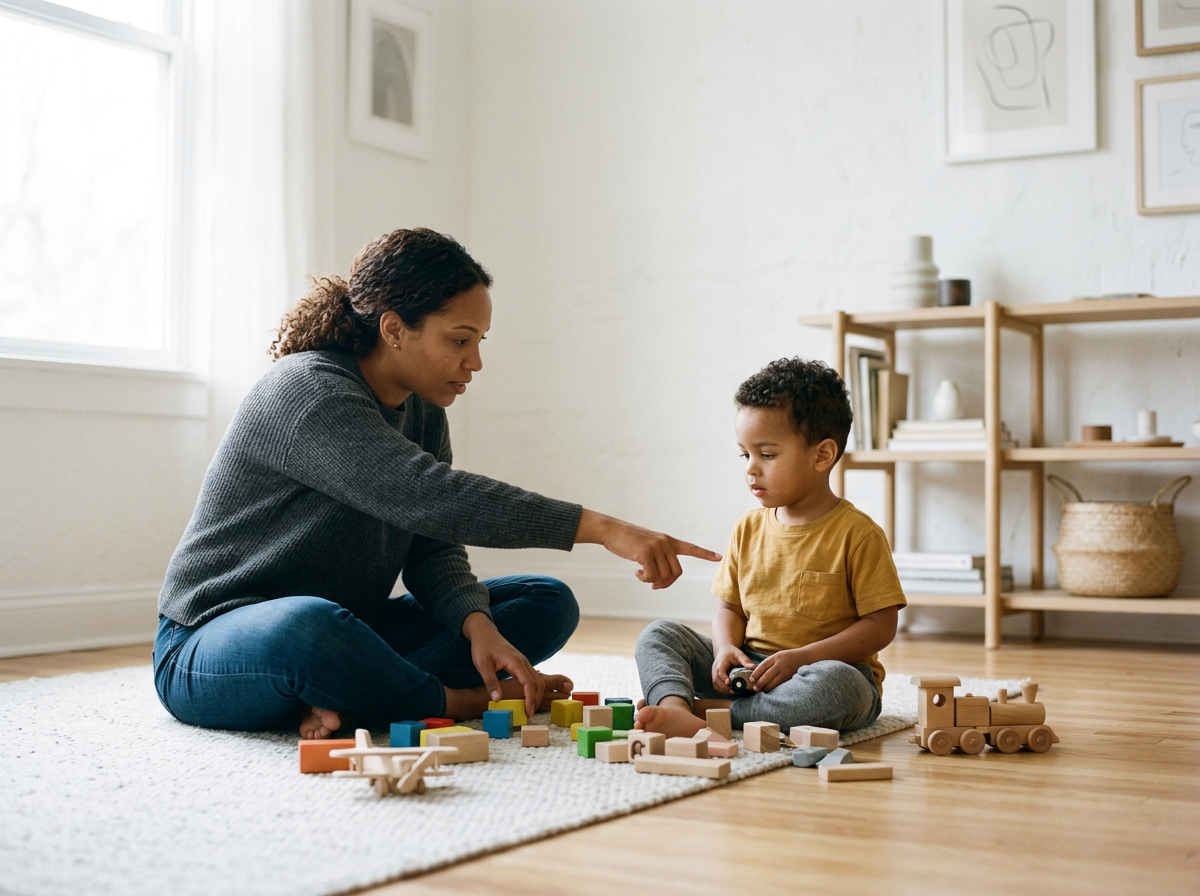
Children learn best when movement is part of something fun. Rather than repeatedly telling your child to move their legs, create opportunities for them to naturally explore other positions. Consider trying:
Cross-legged sitting: Bring out puzzles, books, or games that encourage your child to sit with their legs crossed.
Side-sitting: Place toys slightly to one side so your child has opportunities to reach and play while sitting with both legs directed to one side.
Long sitting: Encourage your child to sit with their legs extended in front of them while playing with toys or looking at a book, if comfortable.
Kneeling and half-kneeling: Use activities at a low table, couch cushion, or sturdy play surface to encourage different positions during play.
Movement-based games: Try reaching for bubbles, rolling a ball, building a block tower, or playing games that encourage turning and shifting weight.
These are opportunities, not requirements. No single sitting position is best for every child, and children benefit from moving between positions rather than being expected to maintain one posture throughout play.
Focus on movement variety, not perfect posture
Our goal as pediatric occupational therapists is not to make every child sit in the same way.
We want children to develop the strength, coordination, balance, and movement options they need to participate in the activities that matter to them.
That means looking beyond what a child's legs are doing and considering the bigger picture.
Can they move in and out of sitting independently? Can they reach for toys in different directions? Can they shift their weight, rotate their trunk, and participate comfortably in play? Do they use a variety of positions throughout the day?
These questions often tell us much more than simply asking whether a child W-sits.
Avoid turning sitting into a constant battle
Repeatedly correcting a child's position can turn play into a frustrating experience for everyone.
Instead of saying, "Fix your legs!" every few minutes, try offering a simple cue such as, "Let's try sitting with our legs in front," or "Can you reach for that toy from this side?"
You can also model different positions yourself and make them part of the activity.
If your child moves back into W-sitting, that doesn't mean you've failed. Children naturally return to positions that feel comfortable or familiar. Gently offering alternatives is often more useful than constantly correcting them.
If a different position causes discomfort or is genuinely difficult for your child, don't force it. That may be a reason to seek guidance rather than insist on a particular posture.
When Should You Talk to an Occupational Therapist or Pediatrician?
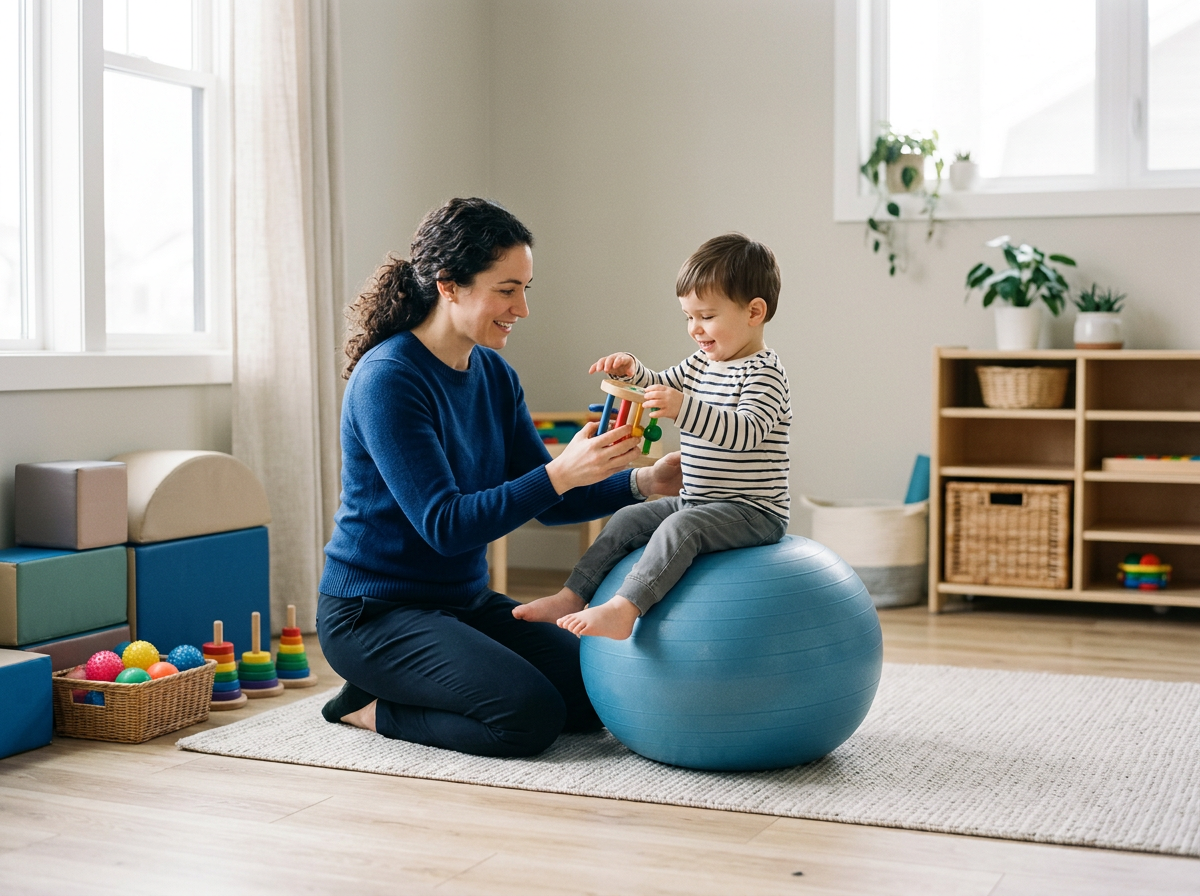
W-sitting alone is usually not a reason to worry. However, if you notice that your child consistently struggles with other positions, has difficulty with balance or coordination, avoids certain movements, or experiences pain, it may be helpful to speak with a healthcare professional
An occupational therapist can look at how your child moves during play and everyday activities, including their postural control, coordination, strength, and ability to transition between positions.
A pediatrician or pediatric physical therapist may also be appropriate if you have concerns about hip development, joint mobility, asymmetry, or pain.
The goal isn't simply to stop W-sitting. It's to understand whether your child has any underlying difficulties and determine whether support would help them participate more comfortably and confidently in daily life.
The Bottom Line: W-Sitting Isn't Something to Panic About
W-sitting has become a hot topic in pediatric development, and it's easy to understand why parents might feel worried when they hear so many warnings about it.
But child development is rarely as black and white as social media makes it seem.
W-sitting is not inherently harmful, and occasional W-sitting does not automatically indicate a developmental problem. For many children, it is simply one of several positions they use during play.
Rather than focusing on eliminating one position, let's focus on encouraging movement variety, supporting children's individual needs, and recognizing when a child's overall movement patterns may warrant a closer look.
As occupational therapists, we want children to move, explore, play, and participate in the world around them. We want to support their development without creating unnecessary worry for families.
So, the next time you see your child W-sitting, remember: look at the whole child, not just the position.
And if you have concerns about your child's movement or development, seeking individualized guidance is always a reasonable next step.
Because when it comes to child development, understanding the why is often much more helpful than simply correcting the what.