
Occupational Therapy vs. Physical Therapy: What's the Difference?
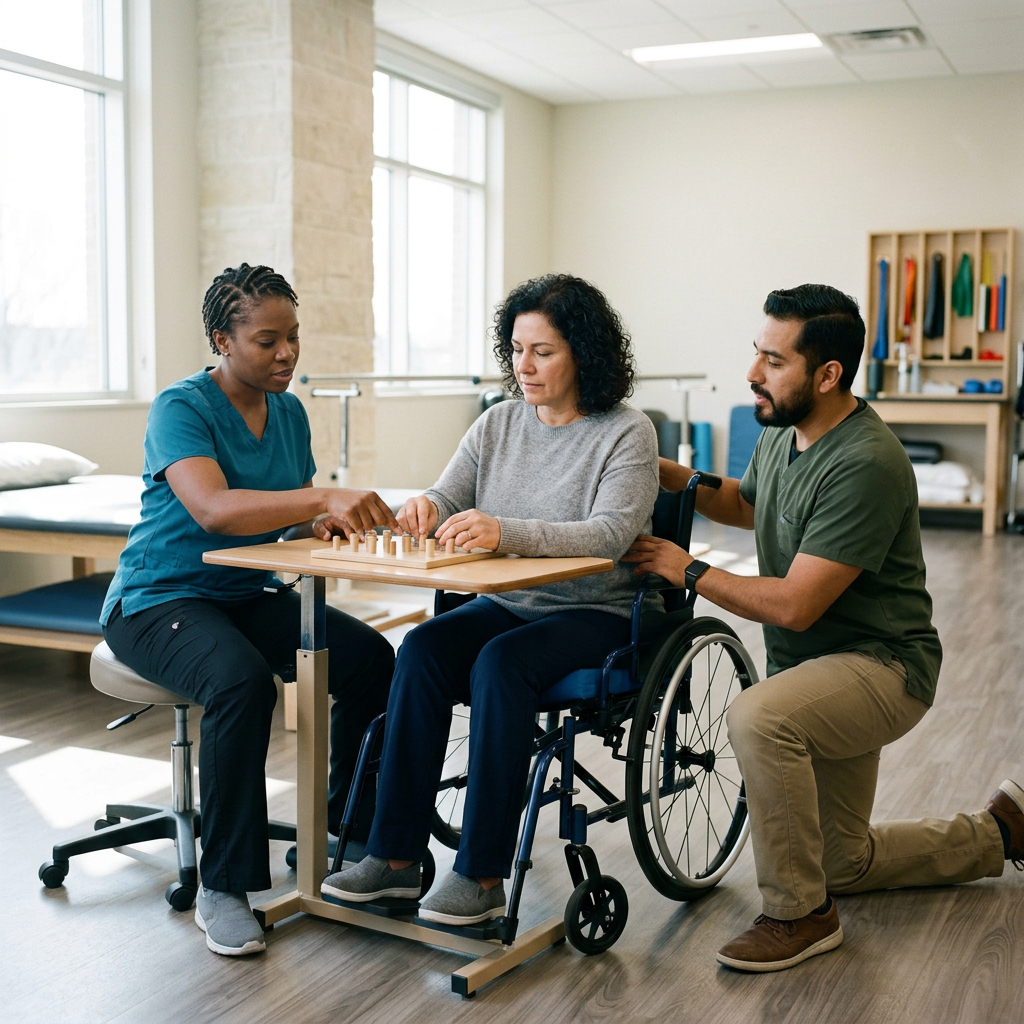
If you or your loved one has an injury, medical condition, developmental delay, or difficulty with everyday activities, you may have heard the terms occupational therapy (OT) and physical therapy (PT). While both therapies help people improve their movement, strength, and independence, they have different areas of focus.
Understanding the difference between occupational therapy and physical therapy can help you determine which type of support may be right for you or your child.
What Is Occupational Therapy?
Occupational therapy focuses on helping people participate in the everyday activities that are meaningful and important to them.
These activities are often called "occupations." They can include everything from getting dressed and brushing your teeth to writing, playing, cooking, working, attending school, and participating in hobbies.
Occupational therapists look at the whole person and consider how physical, sensory, cognitive, emotional, and environmental factors may affect someone's ability to function.
For example, an occupational therapist may work with:
A child who struggles with handwriting or fine motor skills
A child who has difficulty with sensory processing or emotional regulation
An adult recovering from a stroke who needs help becoming independent with daily activities
Someone with a hand injury who is having difficulty getting dressed or returning to work
An older adult who wants to remain independent and safe at home
The goal of OT is not simply to improve a particular skill, it is to help the individual function more successfully in everyday life.
What Is Physical Therapy?
Physical therapy focuses primarily on movement, strength, balance, mobility, and physical function.
Physical therapists help people improve how their bodies move and function. Treatment may include exercises, stretching, balance activities, gait training, manual techniques, and other strategies designed to improve physical abilities.
Physical therapy may be helpful for someone who is:
Recovering from an orthopedic injury
Experiencing difficulty walking or maintaining balance
Recovering after surgery
Managing pain or weakness
Working to improve strength and mobility
Recovering from a neurological condition
For example, a physical therapist may help someone regain the strength and balance needed to walk safely after an injury or surgery.
OT vs. PT: What's the Main Difference?
The simplest way to think about the difference is:
Physical therapy helps you improve movement and physical function.
Occupational therapy helps you use those abilities to participate in everyday life.
There can be overlap between the two professions. Both OTs and PTs may work on strength, coordination, balance, mobility, and motor skills. However, they approach these skills from different perspectives and toward different functional goals.
Here's an Example
Imagine an adult recovering from a stroke.
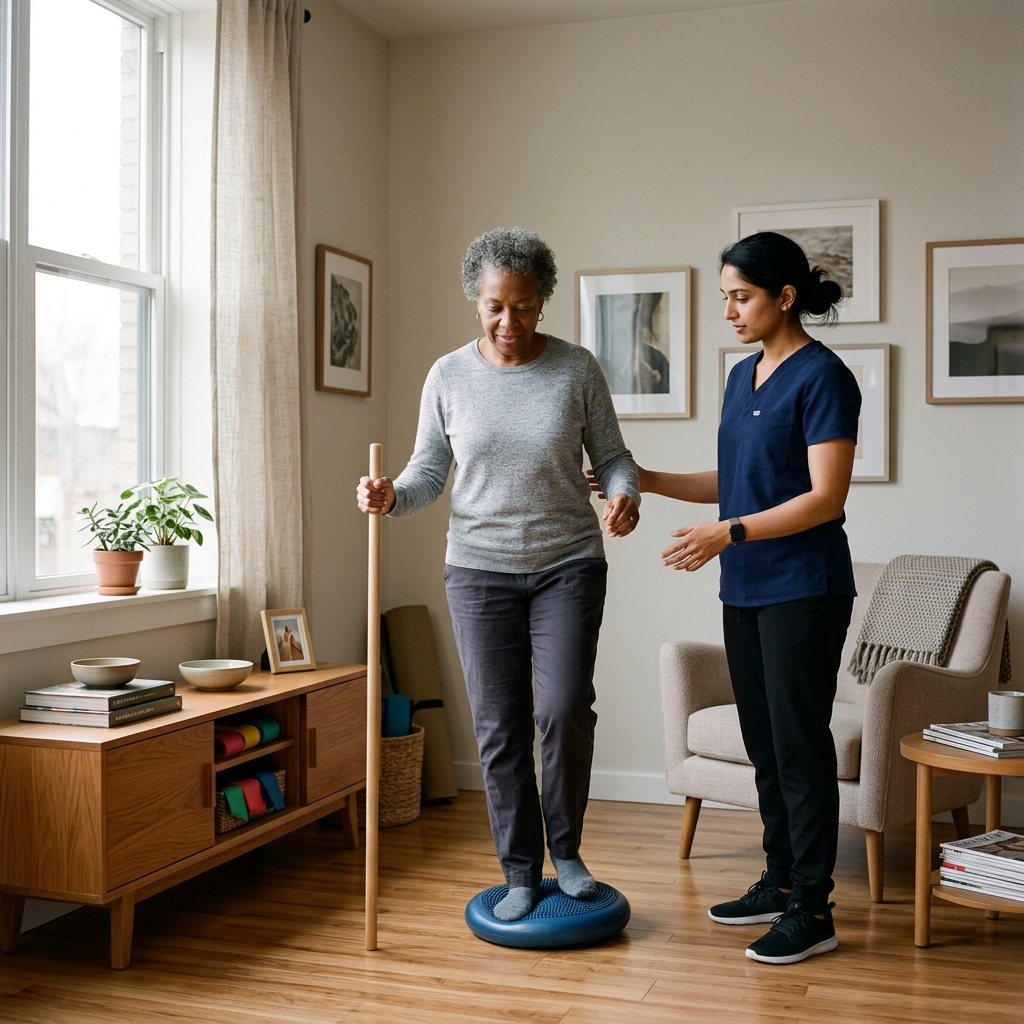
A physical therapist might work on:
Walking
Balance
Leg strength
Transfers
Overall mobility

An occupational therapist might work on:
Getting dressed
Bathing safely
Preparing meals
Using the affected hand during daily tasks
Returning to work or hobbies
Adapting the home environment
Both professionals may work toward greater independence, but they address different aspects of the person's recovery.
What About Children?
Occupational therapy and physical therapy can both play important roles in pediatric care.

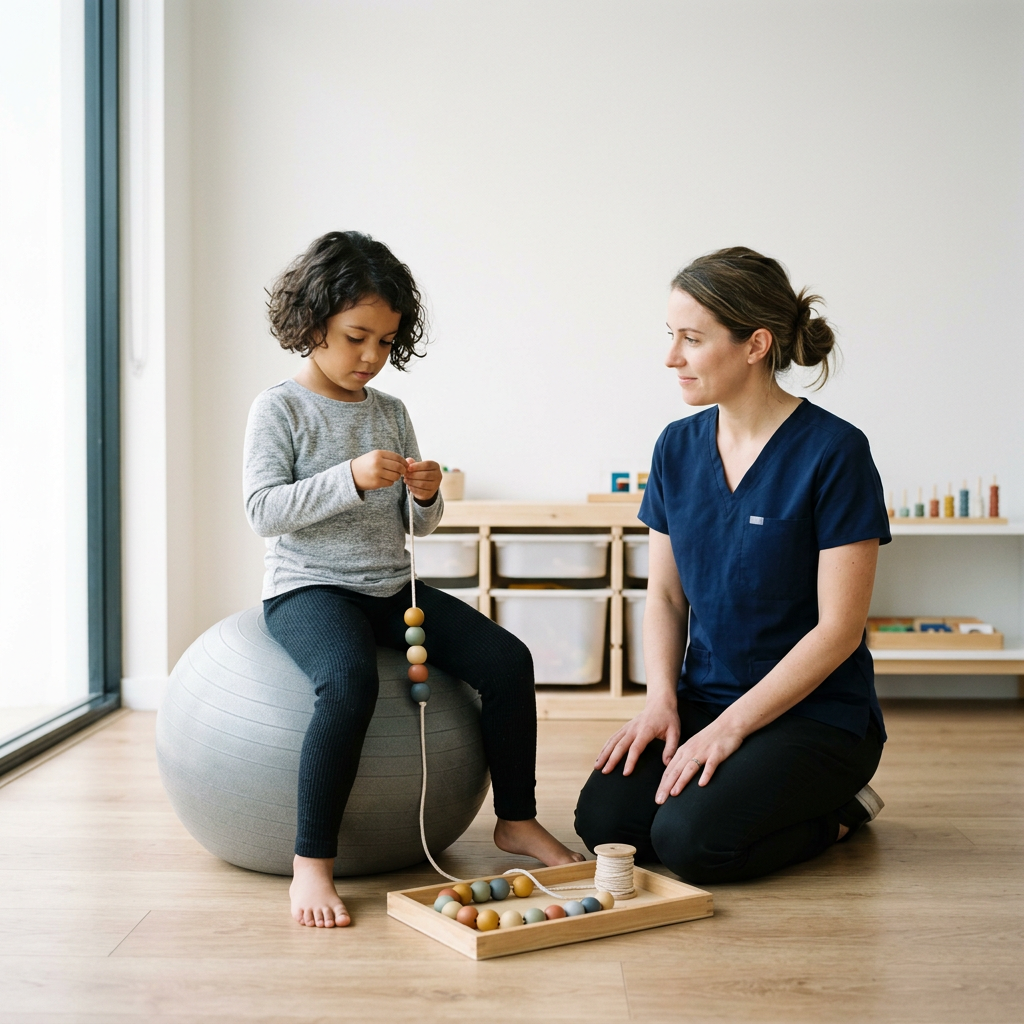
A pediatric occupational therapist may address skills such as:
Fine motor development
Handwriting
Pencil grasp
Cutting with scissors
Dressing and self-care
Feeding skills
Sensory processing
Emotional regulation
Visual-motor skills
School participation
Play skills

A pediatric physical therapist may focus more on:
Gross motor development
Walking
Running
Jumping
Balance
Coordination
Strength
Mobility
Developmental movement skills
For example, if a child has difficulty using scissors, manipulating small objects, or getting dressed independently, OT may be appropriate. If a child has difficulty walking, running, jumping, or maintaining balance, PT may be more appropriate.
In some cases, a child may benefit from both OT and PT. The therapists can work together to address different areas of development.
Can Someone Need Both OT and PT?
Absolutely.
Because occupational therapy and physical therapy have different areas of expertise, some individuals benefit from receiving both services.
For example, someone recovering from a serious injury may need PT to improve strength and mobility while also receiving OT to regain independence with dressing, bathing, cooking, work, or other daily activities.
Similarly, a child with developmental challenges may receive PT to address gross motor skills and OT to support fine motor, sensory, self-care, or school-related skills.
When both therapies are recommended, the professionals can collaborate to create a more comprehensive plan of care. Both therapists can also work together with the child at the same time in a session called a co-treatment.
How Do I Know Which Therapy Is Right for Me or My Child?
It isn't always easy to determine which therapy is needed based on symptoms alone. The best starting point is usually a conversation with your healthcare provider or a qualified therapy professional.
Think about what activities are difficult and how those challenges affect everyday life.
If the primary concern involves movement, strength, walking, balance, or mobility, physical therapy may be appropriate.
If the concern involves performing everyday activities, fine motor skills, sensory processing, self-care, school participation, work, or independence, occupational therapy may be a good fit.
And sometimes, the answer is both.
The Bottom Line
Occupational therapy and physical therapy are different professions, but they share an important goal: helping people participate more fully and independently in their daily lives.
PT generally focuses on movement, mobility, strength, and physical function, while OT focuses on daily activities, independence, participation, and the skills needed to engage in meaningful occupations.
If you're unsure whether occupational therapy may be appropriate for you or your child, an OT evaluation can help identify areas of difficulty and determine what types of support may be beneficial.
Every person has different goals and needs. The right therapy is the one that helps you or your child participate more successfully in the activities that matter most.